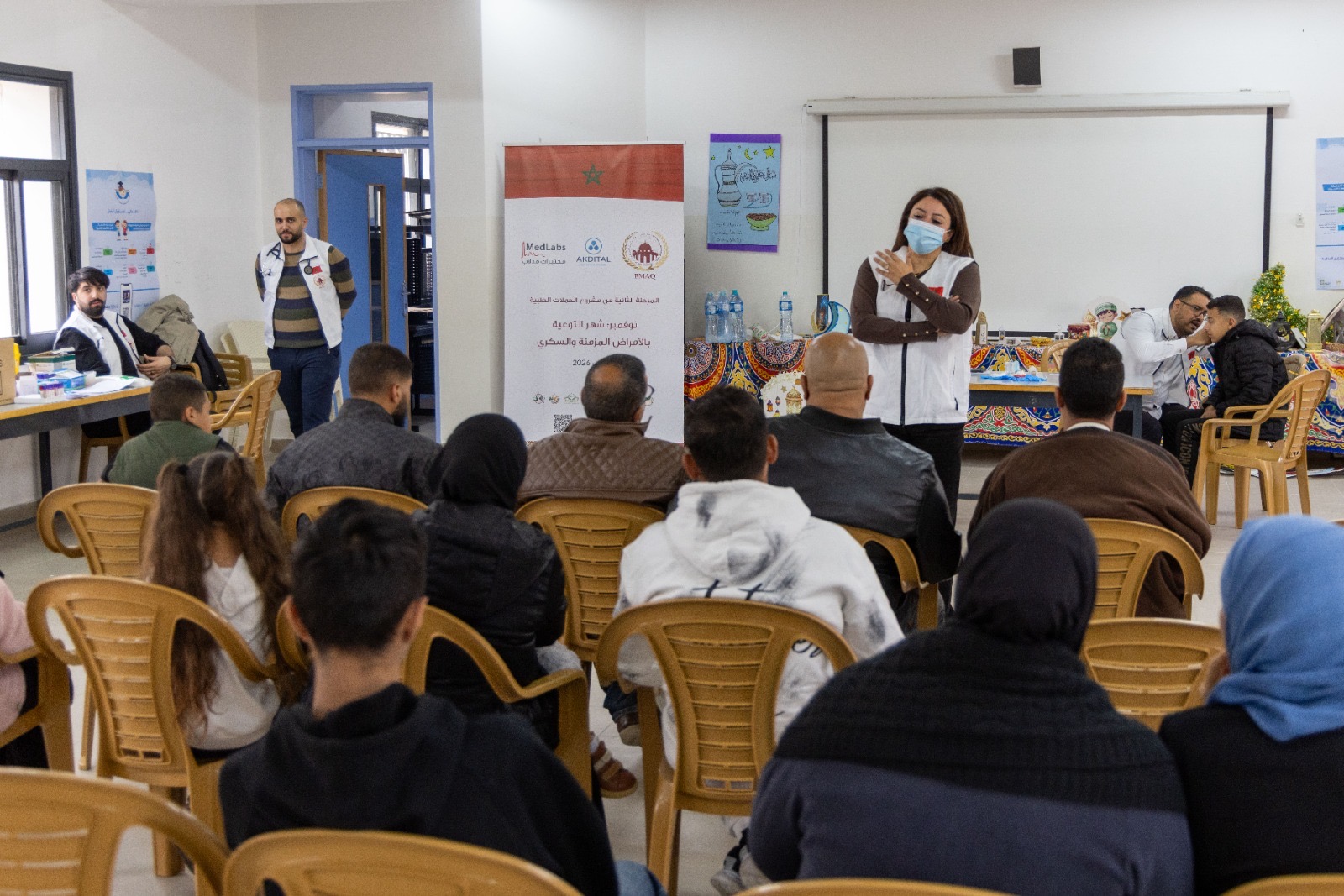
Jerusalem - The free medical caravan of the Bayt Mal Al-Quds Asharif Agency (BMAQ), affiliated with the Al-Quds Committee chaired by His Majesty King Mohammed VI, arrived on Saturday in the towns of East Sawahra and Sheikh Saad, south of Jerusalem Governorate.
The latest caravan, organised by the Agency with the support of Morocco’s Akdital Healthcare Group and in partnership with Astra Lab Laboratories, aims to provide free medical services and consultations to around 150 Palestinian residents of these remote communities.
On this occasion, Dr Bahaa Al-Jabri, Director of Astra Lab Laboratories in Bethlehem, said the medical team provided internal medicine and paediatric services, along with laboratory tests and medication for chronic conditions. The campaign focused on older people and children, with examinations identifying cases of diabetes and others requiring treatment and medical follow-up.
He stressed the importance of regular check-ups and medical consultations for the early detection of diseases, monitoring patients’ health and improving treatment outcomes. He noted that some patients examined during the campaign required follow-up with an internal medicine specialist, either to confirm a diabetes diagnosis or review their treatment.
Al-Jabri stressed the importance of taking mobile medical services to remote communities, where access to healthcare remains limited due to gaps in public and private provision. He noted that financial constraints further hinder residents from travelling to urban centres to seek treatment.
He praised BMAQ’s role in organising the campaigns, noting that medical teams had seen firsthand the urgent need for healthcare and the barriers residents face in reaching medical facilities. He said the partnership with the Agency had enabled them to bring medical examinations, consultations and treatment directly to local communities.
For his part, Mohammed Mousa Allam, a member of Sheikh Saad Club’s administrative board, highlighted the importance of these campaigns, particularly for residents with chronic conditions such as diabetes and hypertension, who face considerable barriers to accessing healthcare.
He explained that the separation wall had cut Sheikh Saad off from its wider Jerusalem surroundings, disrupting access to services. Despite having a local health clinic, the town is now around an hour and a half from Jerusalem, compared with just 10 to 15 minutes previously. The prolonged journey has also hampered the efforts of institutions and teams seeking to deliver services and organise activities in the area.
Allam welcomed BMAQ’s return to Sheikh Saad with another medical campaign, recalling its previous activities in the town. He expressed his appreciation to the Agency and the Moroccan people for their continued support, underscoring the importance of sustaining such initiatives to meet residents’ healthcare needs.
One of the beneficiaries, Youssef Mohammed Masha’ira, said he had sought medical examinations in light of the limited healthcare services available in the town and the difficult conditions facing its residents. He underwent blood pressure, blood and vision tests, and expressed satisfaction with the care he received.
He noted that the campaigns enable residents with limited financial means to undergo medical tests, identify potential illnesses and health problems, and monitor their condition regularly. He called for the initiatives to continue and thanked BMAQ and Morocco for their support.
Another beneficiary, Zahia Mohammed Masha’ira, said she had come to access medical care and obtain medication for her husband. She noted that the rising cost of medicines and difficulty obtaining them placed a strain on the family budget. She hoped future campaigns would also provide essential medicines, expressing gratitude for Morocco’s support and calling for such initiatives to continue.
The second phase of the Agency’s medical campaigns, launched on 19 October 2026, comprises three components. The first, scheduled for October, focuses on breast cancer awareness and early detection through a mobile clinic and awareness sessions on self-examination and screening. The second, taking place in November, addresses men’s health and chronic diseases, including diabetes, high blood pressure and heart disease, with an emphasis on prevention and healthy nutrition. The third, planned for December, focuses on the health of older people and persons with disabilities, offering mental health consultations, guidance on stress management and workshops on home-based healthcare.