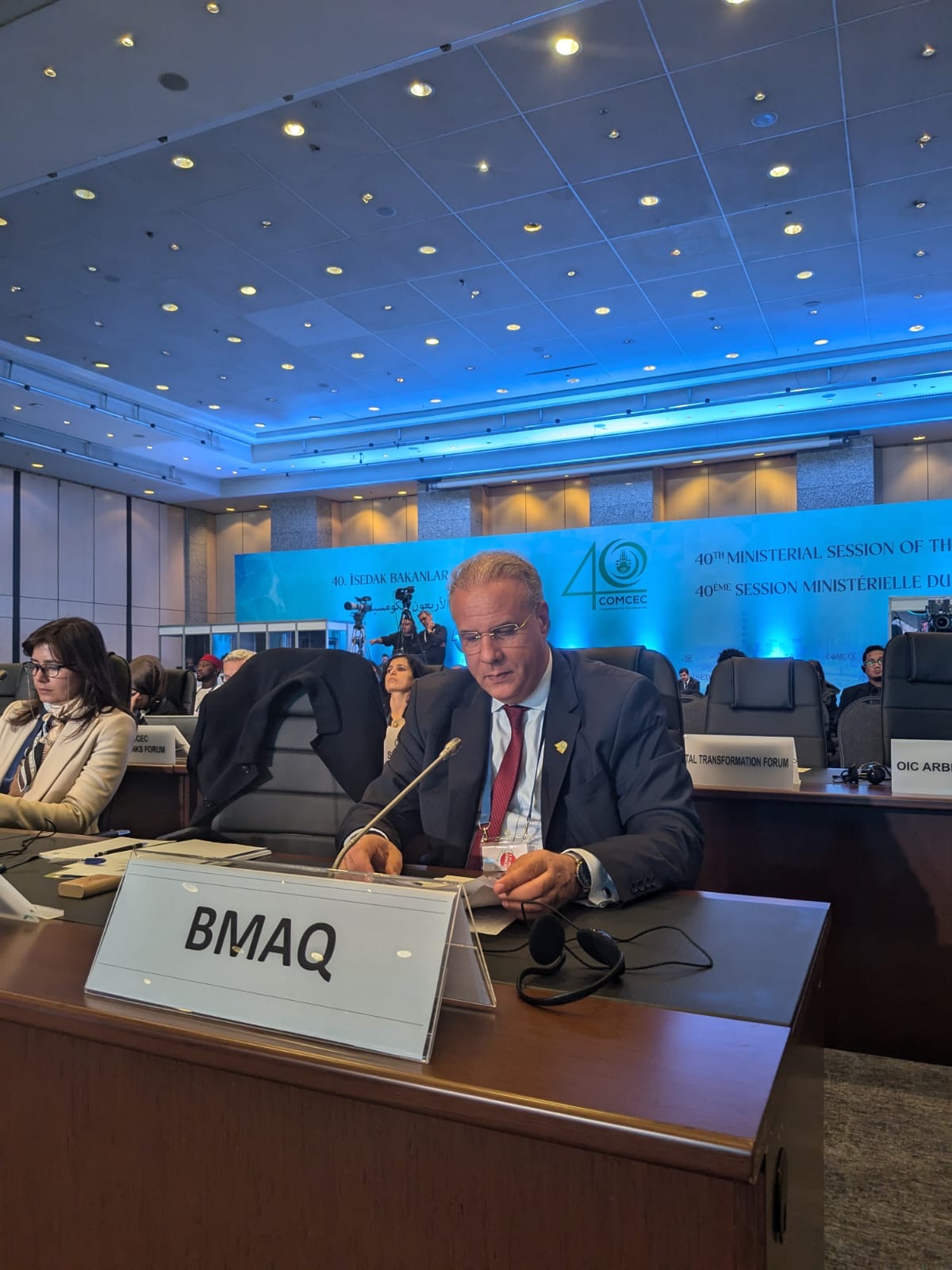
Istanbul - The Bayt Mal Al-Quds Asharif Agency (BMAQ), the executive arm of the Al-Quds Committee, chaired by His Majesty King Mohammed VI, presented its “Made for Palestine” initiative in Istanbul on Tuesday, on the sidelines of the 42nd Ministerial Session of the Standing Committee for Economic and Commercial Cooperation of the Organisation of Islamic Cooperation (COMCEC).
During meetings with the heads of several participating delegations, Mohamed Salem Echarkaoui, Acting Director of BMAQ, outlined the Agency’s 2026 action plan for Jerusalem, centred on the theme: “Revitalising the Palestinian Economy in Jerusalem: A Driver of Development and Social Stability.”
He went on to explain that the Agency plans to launch the “Made for Palestine” initiative following the adoption of its Vision 2030 and 2027–2030 Action Plan. The initiative will enable companies, brands, cooperatives and artisans, both within and beyond the Islamic world, to support Jerusalem’s economy by earmarking a share of their sales for the Agency’s programmes in the city.
Mr Echarkaoui stressed that the initiative forms part of the Agency’s Vision 2030, which seeks to move beyond ad hoc assistance towards the structured and sustainable mobilisation of resources, notably through greater private-sector involvement in supporting Jerusalem’s economy. It will also provide companies and consumers with a transparent and reliable means of expressing their solidarity with Jerusalem through the products they offer and the purchases they make.
The initiative comprises two complementary components. The first covers products featuring designs and symbols inspired by Palestine, which require prior approval before being marketed. The second allows brands to pledge an agreed percentage of their sales to support the Agency’s programmes.
A dedicated digital platform will underpin the initiative, serving as a portal for applications and showcasing participating brands and approved products. It will also enable verification of the authorised use of the initiative’s label through a unique licence number and QR code, while tracking sales declarations and financial transfers to ensure transparency and accountability in the management of contributions.
Turning to the Agency’s broader economic interventions, Mr Echarkaoui described BMAQ’s initiatives to support Jerusalem’s economy and business sector, implemented in partnership with the Arab Chamber of Commerce and Industry in Jerusalem. These include capacity-building for Jerusalemite traders, support for Palestinian start-ups, vocational and craft skills development, and assistance to young people in establishing and expanding their businesses.
On support for entrepreneurship, he reported that the Agency’s Start-up Incubator Programme had supported 34 start-ups across six cohorts in 2025 and 2026. Eight of these businesses had also benefited from acceleration programmes, while three had expanded their commercial operations into Italy and the United Arab Emirates.
He further recalled the Agency’s support for the participation of six Palestinian start-ups in GITEX Africa in Marrakech last April. The event gave them an opportunity to showcase their products and services, connect with investors and potential business partners, and explore avenues for collaboration and access to regional and international markets.
Mr Echarkaoui also drew attention to the Agency’s efforts to strengthen the commercial capacities of Jerusalemite traders. Last July, BMAQ organised four training sessions on import and export for approximately 100 traders, aimed at enhancing their commercial expertise and improving their ability to manage business operations and navigate markets. Participants also received three months of free follow-up support after completing the training, helping them apply their newly acquired knowledge and address business-related queries.
He concluded by highlighting the Agency’s programme in traditional Moroccan crafts, which brought together 38 trainees and three Moroccan artisans for practical training in weaving, wood carving, and copper and silverwork. The programme sought to pass on traditional craftsmanship, strengthen participants’ practical skills and contribute to preserving this heritage, while opening up further opportunities for vocational training in these fields.